Table of Contents
- The Numbers Behind the Luxury Wellness Market Shift
- Generational Wealth Transfer Is Reshaping Buyer Priorities
- What Defines a Luxury Wellness Home in 2026
- North Atlanta Micro-Markets and Where Luxury Wellness Homes Concentrate
- The Investment Case: Why Wellness Homes Hold Value
- What to Look for When Evaluating a Luxury Wellness Property
- Closing Thoughts: A Structural Shift, Not a Trend Cycle
Luxury real estate has always tracked what wealthy buyers value most. In 2026, what they value most is their health. The luxury wellness home category is no longer a niche for biohackers and spa enthusiasts; it has become a primary filter for high-net-worth buyers across North Atlanta, and the financial data now backs up what many of us in the market have been watching develop for several years.
If you are considering a luxury purchase in Forsyth County, Suwanee, Johns Creek, or Alpharetta, understanding the wellness premium baked into these properties is worth your time before you write an offer.
The Numbers Behind the Luxury Wellness Market Shift
This is not a trend driven by lifestyle magazines. The Global Wellness Institute reported in May 2026 that the wellness real estate market expanded from $151 billion in 2017 to $876 billion in 2025, with projections pointing toward $1.8 trillion by 2030. That trajectory is hard to dismiss.
According to a 2026 global wellness real estate market analysis, the sector is growing at 2.4 times the speed of traditional construction, with a compound annual growth rate of 22 percent. The same analysis found that wellness-certified assets command a sales premium of 10 to 25 percent over comparable non-certified properties.
Wellness-certified homes are commanding a 10 to 25 percent sales premium over comparable listings. In a market where the median Atlanta luxury price sits near $1.38 million, that premium translates to real money.
Smart home technology compounds this effect locally. In North Atlanta, homes with integrated smart systems are selling up to 35 percent faster and commanding premiums of three to five percent above comparable listings without them. When you layer wellness certification on top of smart home infrastructure, the combined premium becomes a serious factor in long-term appreciation.
Generational Wealth Transfer Is Reshaping Buyer Priorities
A significant portion of the demand driving luxury wellness home purchases comes from a specific demographic shift. The Coldwell Banker Global Luxury 2026 Trend Report estimated that Gen X and Millennial buyers are set to inherit approximately $2.4 trillion in U.S. real estate alone over the next decade, out of roughly $4.6 trillion in global real estate wealth expected to transfer during the same period.
These inheritors are not buying the way their parents did. They are not prioritizing square footage above all else, and they are not impressed by granite countertops as a selling point. They want homes that reflect their values around health, sustainability, and integrated technology. They also want turnkey properties; renovation fatigue is real among this cohort, and a home that requires six months of contractor management before it is livable is a hard sell regardless of price.
In North Atlanta specifically, this plays out in what buyers ask about during showings. Questions about air filtration systems, circadian lighting, and whole-home water purification have become routine in the luxury segment. Five years ago, those were unusual requests. Now they are baseline expectations for a significant portion of buyers above $1.5 million.
What Defines a Luxury Wellness Home in 2026
The term “wellness home” covers a wide range of features, and not all of them carry equal weight with buyers or appraisers. Based on what is actually moving in North Atlanta’s luxury market, the features that consistently add demonstrable value fall into a few clear categories.
Air and Water Quality Systems
Hospital-grade HEPA filtration, UV air purification, and ERV (energy recovery ventilation) systems have moved from optional upgrades to standard expectations in the luxury wellness segment. Whole-home water filtration, including point-of-entry carbon and reverse osmosis systems, follows the same pattern.
These systems appeal to buyers on two levels: they are immediately functional, and they signal that the builder or seller invested in the home’s long-term livability rather than just its surface finishes. That signal carries weight in negotiations.
Dedicated Recovery and Fitness Spaces
Approximately 65 percent of wellness developments now include dedicated fitness, relaxation, or recreational spaces, according to September 2026 data from Business Research Insights. In North Atlanta luxury homes, the specific features buyers are requesting include:
- Infrared saunas with chromotherapy lighting
- Cold plunge pools or cold immersion rooms
- Home gyms with rubber flooring, commercial-grade ventilation, and dedicated electrical circuits
- Spa-inspired bathrooms with steam showers and heated floors
- Dedicated yoga or meditation rooms with acoustic treatment
These are not novelty amenities. Buyers using them daily assign real utility value to their presence, and that utility translates into willingness to pay a premium at closing.
Sustainable Materials and Energy Efficiency
Nearly 55 percent of wellness developments incorporate sustainable materials and energy-efficient solutions, per the same September 2026 data. In practice, this means low-VOC paints and adhesives, FSC-certified wood, non-toxic insulation, and solar-ready or solar-equipped electrical systems.
WELL certification, issued by the International WELL Building Institute, provides a third-party framework for assessing and certifying buildings based on their measurable impact on human health. While not every luxury wellness home in North Atlanta carries formal WELL certification, builders who design to those standards and document it have a marketing advantage that is increasingly recognized by buyers who have done their research.
Circadian and Biophilic Design
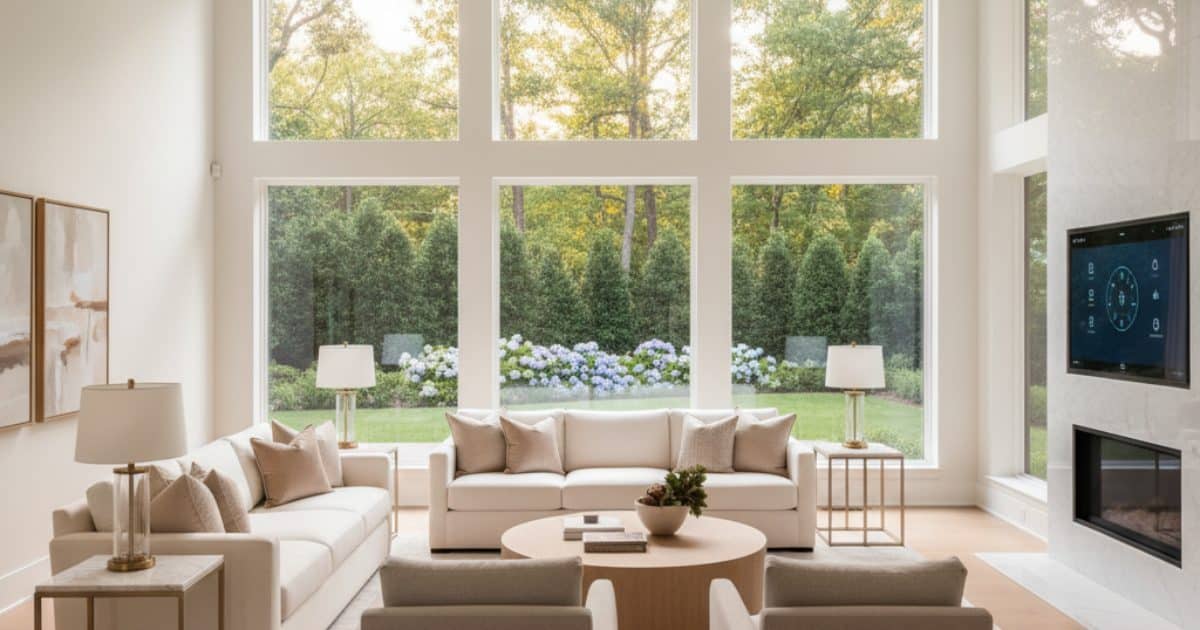
Circadian lighting systems adjust color temperature and intensity throughout the day to support natural sleep-wake cycles. Biophilic design integrates natural materials, living walls, water features, and unobstructed natural light to reduce stress and improve cognitive function. These are not interior design preferences; they are features with a documented physiological basis, and buyers in the $2 million-plus range are increasingly aware of that research.
North Atlanta Micro-Markets and Where Luxury Wellness Homes Concentrate
Not every submarket in North Atlanta offers the same inventory of wellness-oriented luxury properties. Understanding where these homes cluster helps buyers focus their search and helps sellers understand their competitive position.
Johns Creek and Alpharetta
Johns Creek has long attracted buyers who prioritize school district quality alongside home quality, and the luxury wellness segment there reflects that. Large lots with room for outdoor amenities, newer construction with advanced mechanical systems, and proximity to medical facilities make it a natural fit. You can browse current homes for sale in Johns Creek, GA to get a sense of what is currently available in the luxury tier.
Alpharetta continues to show strong demand and price stability. Inventory in Alpharetta increased nine percent and average sales prices rose 12 percent compared to April 2025, according to May 2026 data. The walkability of Alpharetta’s core, combined with access to Halcyon and the broader Forsyth County amenity base, makes it a draw for buyers who want urban convenience without sacrificing square footage.
Gated and Golf Communities in Forsyth County
Communities like Laurel Springs in Cumming offer a combination of gated security, established amenity infrastructure, and the kind of lot sizes that support serious outdoor wellness features. The privacy factor matters to buyers who are investing in cold plunge pools or outdoor spa installations; they are not building those features to share a fence line with a neighbor 15 feet away.
Suwanee’s Edinburgh and The River Club represent a different profile, with golf course settings and riverfront access that provide built-in biophilic value. You can explore the full range of North Atlanta communities across the region to compare what each submarket offers in terms of amenities, lot sizes, and price points.
The Investment Case: Why Wellness Homes Hold Value
Skeptics sometimes argue that wellness features are lifestyle preferences rather than durable value drivers. The 2026 market data does not support that argument.
The 10 to 25 percent wellness premium documented in the market analysis is not a one-time phenomenon. It reflects a structural shift in what buyers are willing to pay for, and that shift is being reinforced by the generational wealth transfer described above. As more high-net-worth buyers from the Gen X and Millennial cohorts enter the luxury market over the next decade, demand for wellness-integrated properties is likely to increase, not plateau.
Atlanta’s luxury inventory was up roughly 18 percent year over year as of August 2026. That increase gives buyers more options and more negotiating room than they had in 2022 or 2023. For a buyer with specific wellness requirements, a more balanced inventory environment means less pressure to compromise on features. For sellers who have invested in wellness upgrades, differentiation from the expanded inventory pool is more important than ever, and documented wellness features provide that differentiation in a way that another bathroom renovation does not.
Three factors make wellness homes particularly resilient as long-term investments:
- Replacement cost: Retrofitting wellness infrastructure into an existing home is expensive and disruptive. Buyers who find it already installed will pay a premium to avoid the project.
- Demographic tailwind: The buyer cohort most interested in wellness features is growing as a share of the luxury market, not shrinking.
- Certification upside: Homes that pursue formal WELL certification or equivalent documentation gain a marketing advantage that compounds over time as buyer awareness of these standards increases.
What to Look for When Evaluating a Luxury Wellness Property
Buyers approaching this segment for the first time sometimes focus on the visible amenities, the sauna, the gym, the spa bathroom, and overlook the mechanical and structural elements that determine whether those features actually perform as intended. A few things worth scrutinizing carefully:
- Verify that air filtration systems are properly sized for the home’s square footage and have documented maintenance records.
- Confirm that electrical panels and circuits are adequate for high-draw wellness equipment like infrared saunas and cold plunge chillers.
- Ask for documentation of any wellness certifications or builder specifications that informed the design.
- Assess outdoor amenity spaces for year-round usability; Georgia summers are not forgiving, and shade structures, cooling misters, and covered outdoor areas matter more than buyers from northern climates sometimes expect.
- Evaluate the home’s natural light exposure, particularly for circadian lighting claims; a home with small windows and a northern orientation cannot compensate with light bulbs alone.
A home inspector with specific experience in high-performance or wellness-oriented construction is worth the additional cost in this price range. Standard home inspection protocols were not designed with these systems in mind.
Closing Thoughts: A Structural Shift, Not a Trend Cycle
The luxury wellness home category is drawing serious capital and serious buyers because it addresses something that square footage and finishes alone cannot: the quality of daily life inside the home. As the research data makes clear, the market is pricing that quality premium consistently and the trajectory points toward further growth through 2030.
For buyers in North Atlanta’s luxury segment, the current inventory environment provides a reasonable window to be selective. For sellers who have invested in wellness features, documenting those investments clearly and marketing them to the right buyer pool is the difference between a standard sale and a premium one.
If you are evaluating luxury homes in North Atlanta with wellness features as a priority, I work this market daily and can help you assess what a specific property’s wellness infrastructure is actually worth relative to its asking price. Reach out through the contact information on this site, and we can have a straightforward conversation about what is available and what represents real value.
Frequently Asked Questions
What is a luxury wellness home in 2026?
A luxury wellness home in 2026 is a property designed to prioritize the health and well-being of its occupants. Key features include advanced air and water purification systems, dedicated spaces for fitness and recovery like saunas or cold plunge pools, and the use of sustainable materials and energy-efficient solutions.
How much of a sales premium can wellness-certified homes command?
Wellness-certified assets command a sales premium of 10 to 25 percent over comparable non-certified properties. This premium translates to significant financial gains, especially in markets with high median luxury prices.
Will investing in a luxury wellness home hold its value over time?
Yes, luxury wellness homes are expected to hold their value and appreciate due to a structural shift in buyer priorities, reinforced by generational wealth transfer. The demand for properties integrating health and sustainability features is growing, not shrinking.
What are the most important features to look for when evaluating a luxury wellness property?
Beyond visible amenities like saunas, it's crucial to scrutinize the mechanical and structural elements. Verify that air filtration systems are properly sized and maintained, confirm adequate electrical capacity for equipment, and ask for documentation of any wellness certifications or builder specifications.
How does generational wealth transfer influence the demand for luxury wellness homes?
Gen X and Millennial buyers, who are set to inherit substantial real estate wealth, are reshaping market priorities. They are less focused on sheer square footage and more interested in homes that align with their values of health, sustainability, and integrated technology, often preferring turnkey properties.