
Table of Contents
- What the Approved North Point Mall Redevelopment Actually Includes
- What Residents Were Asking Before the Vote
- How This Fits the Broader Alpharetta Development Pattern
- What This Means for Alpharetta Real Estate Values
- Infrastructure Questions That Still Need Answers
- Alpharetta Development and the Surrounding Community Picture
- What to Watch Over the Next 12 to 24 Months
- A Practical Perspective for Buyers and Sellers
North Point Mall has been a fixture of Alpharetta life for decades. At its peak, it was one of the busiest malls in Georgia. By the early 2020s, it had become a cautionary tale about the decline of traditional retail. In August 2026, the Alpharetta City Council approved a full redevelopment plan for the site, and the conversation shifted from “what happened to the mall?” to something far more consequential: what does this mean for the people who already live here?
This post breaks down what the approved plan actually involves, what residents raised as concerns during the public process, and how this particular wave of Alpharetta development fits into the broader real estate picture across North Atlanta.
What the Approved North Point Mall Redevelopment Actually Includes
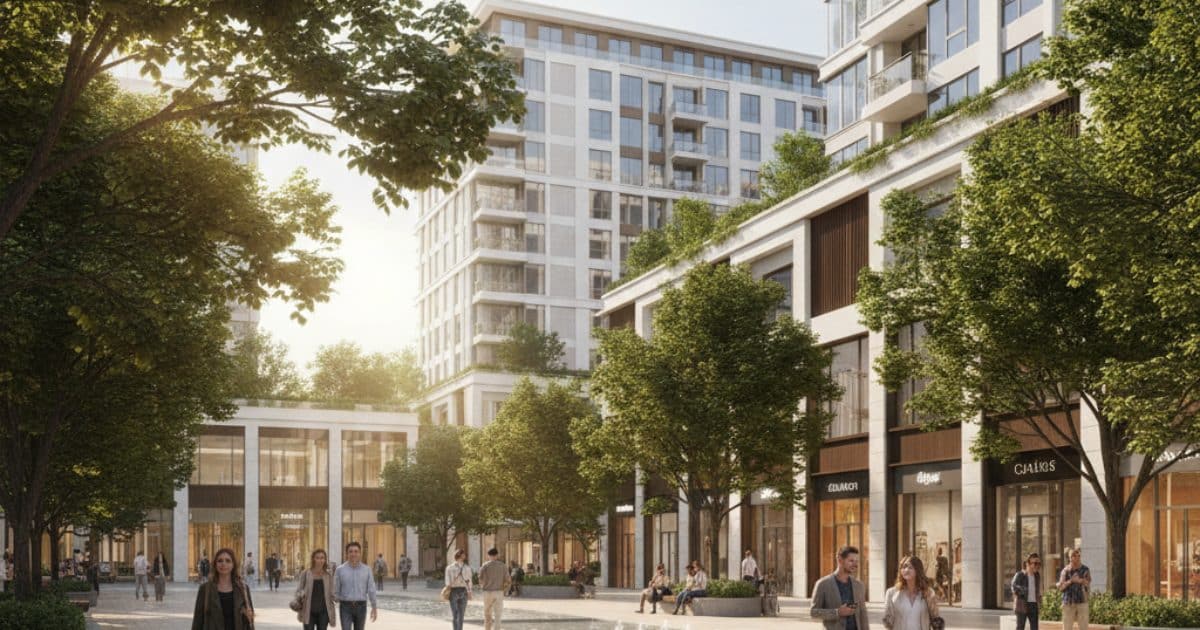
The short version: the site is being repositioned as a mixed-use district rather than rebuilt as a conventional shopping center. The approved plan, as reported by the Atlanta Journal-Constitution in August 2026, includes provisions targeting an NHL expansion team as an anchor tenant. That detail alone signals how dramatically the vision for this site has changed.
A hockey arena as a centerpiece of a former suburban mall is not a subtle pivot. It implies a density of activity, infrastructure investment, and foot traffic that will reshape the surrounding corridor. Residential units, retail space, and public areas are all part of the broader proposal, though specific square footage figures and unit counts were still being finalized in the months following approval.
What is clear is that the city is not treating this as a patch job. The scale of the proposal puts it among the most significant single-site Alpharetta development projects in recent memory.
The Role of Alpharetta’s Incentive Zoning Framework
The redevelopment did not happen in a policy vacuum. The City of Alpharetta has maintained a Downtown Incentive Zoning Package designed to encourage exactly this kind of dense, mixed-use redevelopment in targeted areas. That framework gives developers a path to higher density in exchange for public amenities, design standards, and community benefits.
Whether the North Point site falls cleanly under that framework or required separate zoning action is a detail worth tracking on the city’s planning portal. The broader point is that Alpharetta has been building toward this type of redevelopment for years, and the policy tools were already in place when this proposal came forward.
What Residents Were Asking Before the Vote
Approval in August 2026 did not mean universal enthusiasm. Back in October 2024, well before the final vote, 11Alive reported that Alpharetta residents raised pointed questions about the redevelopment proposal at community meetings. Those concerns did not disappear when the plan was approved; they became the baseline for what residents will be watching as construction progresses.
The recurring themes from those early community sessions included:
- Traffic and road capacity along the GA-400 corridor and surrounding surface streets, which are already strained during peak hours
- School capacity and whether the residential component of the project would add students to already-crowded Fulton County schools
- Greenspace and stormwater management on a large impervious-surface site that currently handles significant runoff
- Community character and whether a sports and entertainment anchor would alter the feel of the surrounding residential neighborhoods
- Affordability of housing within the new residential units, given that mixed-use redevelopments in North Atlanta tend to skew toward higher price points
These are reasonable concerns, and most of them do not have clean answers yet. Infrastructure timelines rarely align neatly with construction timelines, and the traffic question in particular will depend heavily on what GDOT and the city negotiate as part of the development agreement.
How This Fits the Broader Alpharetta Development Pattern
North Point is not the first large-format Alpharetta development to bet on mixed-use density. The Avalon project, which opened in phases starting around 2014, demonstrated that Alpharetta residents and visitors would support a walkable, live-work-play environment at a premium price point. That project helped establish the template that developers have been referencing ever since.
The difference with North Point is scale and complexity. Avalon was built on largely undeveloped land. North Point involves demolishing or repurposing an existing structure with decades of utility infrastructure, parking decks, and anchor pads. The logistics are harder, the timeline is longer, and the community stakes are higher because the site sits in a denser residential context.
The NHL Angle and What It Signals
The NHL expansion component deserves its own paragraph because it changes the economic math considerably. A professional sports venue generates a different category of traffic, economic activity, and regional attention than a standard retail or residential project.
If an NHL franchise does land in Alpharetta, the North Point site would become a regional destination, not just a neighborhood amenity. That has real upside for property values in the immediate area. It also creates legitimate questions about game-night congestion, noise, and the character of adjacent streets on event evenings.
As of the August 2026 approval, the NHL expansion was still a target, not a confirmed commitment. That distinction matters for anyone making real estate decisions based on the full vision versus the approved plan.
Alpharetta’s Position in the North Atlanta Corridor
Alpharetta already carries significant weight as a corporate hub, particularly along the GA-400 technology corridor. Companies including NCR Voyix, Fiserv, and dozens of mid-size tech firms have operations here. That employment base drives housing demand, and housing demand shapes what developers are willing to build.
The North Point redevelopment is, in part, a response to that demand. Younger employees drawn to Alpharetta’s job market increasingly want walkable, mixed-use environments rather than traditional suburban subdivisions. The redevelopment is an attempt to provide that option within city limits rather than losing those residents to Midtown Atlanta or other denser submarkets.
If you are weighing Alpharetta against other North Atlanta communities, the comparison article on Suwanee versus Alpharetta covers how these two markets differ in character, price, and lifestyle fit.
What This Means for Alpharetta Real Estate Values
Large mixed-use redevelopments tend to lift property values in adjacent areas over time, but the timeline matters. During active construction, properties immediately surrounding a major site often see slower appreciation, increased noise complaints, and reduced curb appeal. The value lift typically comes after the project stabilizes and the amenity base becomes real rather than conceptual.
The practical rule for buyers near a major redevelopment site: the project’s approval is not the same as the project’s completion. Price the risk of a multi-year construction timeline into your decision, not just the upside of the finished product.
For sellers in the North Point area, timing matters. Listing during active construction is harder than listing before it starts or after it finishes. Buyers have legitimate questions about what the neighborhood will look like in three years, and those questions create negotiating leverage that would not exist in a more settled market.
Inventory and Pricing Context in Alpharetta Right Now
The broader Alpharetta market in late 2026 reflects the same dynamics visible across North Atlanta: more inventory than we saw during the 2021-2022 frenzy, longer days on market, and buyers who are more deliberate because elevated mortgage rates have compressed their purchasing power.
Move-in ready homes at accurate price points are still moving. Overpriced listings are sitting. That dynamic is not unique to Alpharetta, but it does mean that sellers near the North Point corridor cannot rely on development excitement alone to carry a listing. Pricing discipline still applies.
You can browse current homes for sale in Alpharetta, GA to get a sense of what the active inventory looks like across different price points and neighborhoods.
Infrastructure Questions That Still Need Answers
Approving a redevelopment plan and funding the infrastructure to support it are two separate processes. The North Point site sits at the intersection of several already-congested corridors. The redevelopment will generate significant new vehicle trips, and the road network will need to absorb them.
Key infrastructure questions that residents and buyers should monitor include:
- Whether GDOT commits to interchange improvements on GA-400 near the site before or concurrent with construction
- How the city plans to handle pedestrian and bicycle connectivity between the site and surrounding neighborhoods
- What transit options, if any, are part of the plan, given that North Fulton has historically underinvested in transit infrastructure
- How stormwater detention will be handled on a site that currently has extensive impervious coverage
These are not hypothetical concerns. They are the difference between a redevelopment that improves quality of life for adjacent residents and one that simply increases congestion while adding amenities that require a car to reach.
Alpharetta Development and the Surrounding Community Picture
Alpharetta does not exist in isolation. Development activity here has ripple effects across Johns Creek, Roswell, and the southern edge of Forsyth County. As Alpharetta adds density and mixed-use options, some buyers who might have defaulted to Alpharetta will reconsider whether they want to be adjacent to that density or would prefer a quieter community profile.
That is not a criticism of the redevelopment. It is a realistic observation about how buyer preferences work. Some households will find the North Point transformation exciting and will pay a premium to be close to it. Others will decide they would rather be in Sugar Hill or southern Forsyth County, where the pace of change is slower and the suburban character is more intact.
If you want a broader look at how communities across North Atlanta compare, the community overview page covers the full range of options across the corridor, from gated golf communities to newer mixed-use neighborhoods.
Forsyth County as a Counterpoint
Forsyth County, and Cumming in particular, has been absorbing significant population growth without the same push toward urban density. The development pattern there has been more traditional: master-planned subdivisions, retail corridors along major roads, and school capacity expansions running slightly behind demand.
That contrast is worth understanding if you are relocating to North Atlanta and trying to decide where to focus your search. Alpharetta development is trending toward density and mixed-use activity. Forsyth County is trending toward scale and suburban expansion. Neither is inherently better; they serve different household priorities.
What to Watch Over the Next 12 to 24 Months
The August 2026 approval was the end of the planning phase and the beginning of the execution phase. For residents and prospective buyers, the next 12 to 24 months will reveal a great deal about whether the approved vision holds or gets modified under the pressure of financing, contractor timelines, and NHL franchise negotiations.
Specific milestones worth tracking:
- Demolition or adaptive reuse permits for the existing mall structure
- Any formal announcement from the NHL regarding expansion franchise awards
- GDOT project announcements related to the GA-400 corridor near the site
- Fulton County Schools capacity studies tied to the residential component
- Groundbreaking dates for individual phases of the project
Following the City of Alpharetta’s planning department updates directly is the most reliable way to track these milestones. City council meeting agendas and minutes are publicly posted and tend to be more detailed than press coverage.
A Practical Perspective for Buyers and Sellers
If you are a buyer considering a home near North Point, the honest advice is to price in uncertainty. The approved Alpharetta development plan is ambitious, and ambitious plans take time, encounter delays, and sometimes change scope. Buying close to a major construction site requires patience and a longer investment horizon than buying in a stable, built-out neighborhood.
If you are a seller in the area, the redevelopment is a legitimate selling point, but it needs to be framed accurately. Buyers will do their research. Overstating the certainty of the NHL component or the timeline for completion will create friction, not enthusiasm.
I have been working in this market for over 15 years, and the North Point redevelopment is one of the most consequential single projects I have seen proposed for Alpharetta. It has real potential to shift the character of that corridor in ways that benefit long-term property owners. It also carries real execution risk that any buyer or seller in the area should factor into their decisions.
If you are trying to figure out how this development affects your specific situation, whether you are buying, selling, or just trying to understand what the next few years look like for your neighborhood, reach out directly through the contact page. I am happy to give you a grounded read on what this means for your specific address, price point, and timeline.
Frequently Asked Questions
What is the North Point Mall redevelopment plan?
The North Point Mall site is being redeveloped into a mixed-use district, moving away from its traditional shopping center model. The approved plan includes provisions for an NHL expansion team as an anchor tenant, alongside residential units, retail space, and public areas.
What were the main concerns residents had before the North Point Mall redevelopment vote?
Before the vote, residents raised concerns about increased traffic and road capacity, the impact on school capacity, stormwater management, maintaining community character, and the affordability of new housing units. These concerns remain points of observation as development progresses.
How will the North Point Mall redevelopment affect local real estate values?
Large mixed-use redevelopments like this tend to lift property values in adjacent areas over time, but this benefit typically materializes after construction stabilizes. During active construction, properties nearby might experience slower appreciation due to noise and disruption.
What infrastructure challenges need to be addressed for the North Point Mall redevelopment?
Key infrastructure questions involve GDOT's commitment to interchange improvements on GA-400, plans for pedestrian and bicycle connectivity, potential transit options, and how stormwater detention will be managed on the site. Addressing these is crucial for the redevelopment to enhance, rather than detract from, local quality of life.
What should buyers and sellers consider regarding the North Point Mall redevelopment?
Buyers should price in the uncertainty and longer investment horizon associated with a multi-year construction timeline, rather than just focusing on the future upside. Sellers should frame the redevelopment accurately, as buyers will research the project and its potential impacts, especially the NHL component's confirmation and completion timelines.