
Table of Contents
- Why So Many People Are Moving to Georgia's Forsyth County
- What Lake Lanier Actually Adds to Daily Life
- The School District Factor
- Forsyth County Real Estate: Where the Market Stands
- Comparing Forsyth County to Nearby Options
- Practical Realities of Moving to Georgia's Lake Communities
- Who Forsyth County Is Really Built For
- Making the Decision: What to Do Before You Commit
- A Final Word on Forsyth County's Long-Term Outlook
Every week, I talk with people who are considering moving to Georgia and have done their homework on Forsyth County. They’ve seen the school rankings. They’ve looked at the income data. But the question that keeps coming up, almost without fail, is about Lake Lanier. Specifically: what is it actually like to live near it?
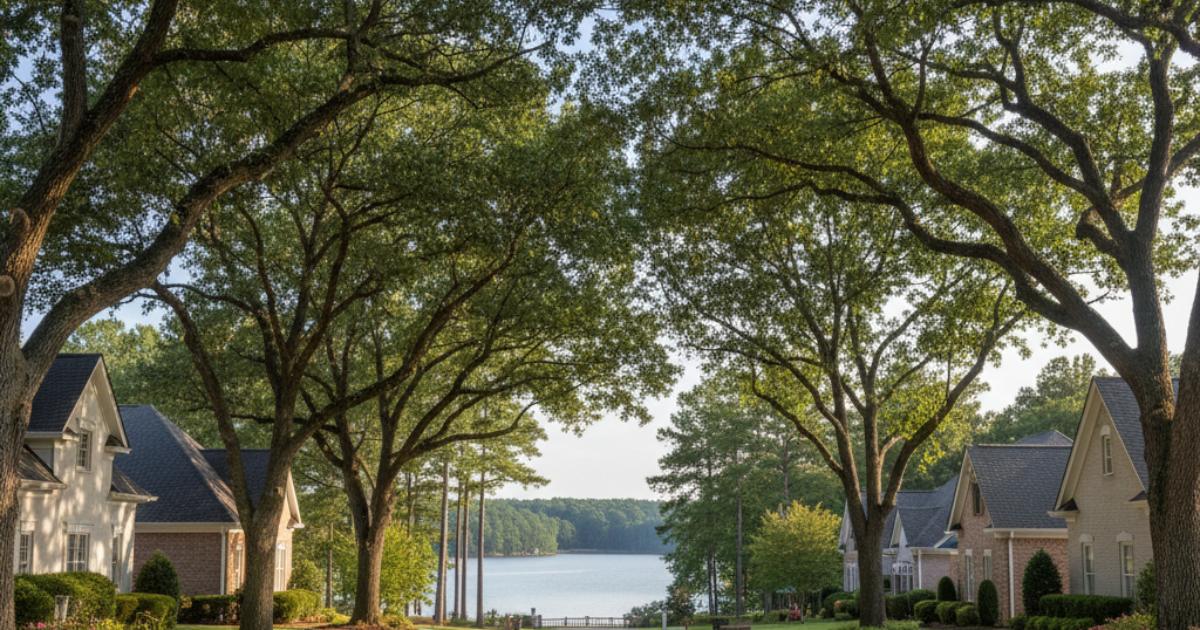
That question deserves a straight answer, not a brochure. Forsyth County sits along the southern and western shores of Lake Lanier, a 38,000-acre reservoir managed by the U.S. Army Corps of Engineers. The lake shapes the character of the county in ways that go well beyond weekend recreation. It influences property values, community identity, and the day-to-day texture of life in ways that are hard to appreciate until you’ve spent real time here.
This post covers what you need to know before making a move: the demographic picture, the real estate conditions as of late 2026, the lifestyle realities of lake-adjacent living, and why Forsyth County continues to attract buyers despite a market that has shifted considerably from its pandemic-era peak.
Why So Many People Are Moving to Georgia’s Forsyth County
The numbers are hard to argue with. According to Forward Forsyth, the county’s official economic development organization, Forsyth County had a population of 285,682 as of 2024, with a median household income of $142,525. It ranked first in Georgia for health, affluence, and its public school system that same year.
Growth has been consistent and substantial. USAFacts population data for Forsyth County shows the county grew by 33.8 percent between 2015 and 2025, adding roughly 4,000 residents between 2024 and 2025 alone. Forward Forsyth projects the county will reach nearly 495,000 residents by 2040. That trajectory reflects sustained demand, not a short-term spike.
Forsyth County ranked first in Georgia for health, affluence, and its public school system as of 2024, and its population is projected to nearly double between 2024 and 2040.
Much of that growth comes from out-of-state migration. People moving to Georgia from the Northeast, Midwest, and West Coast are consistently landing in Forsyth County because the combination of school quality, income levels, and lifestyle amenities is difficult to match elsewhere in the metro area.
What Lake Lanier Actually Adds to Daily Life
Lake Lanier is not a backdrop. For residents of Forsyth County, it is an active part of life in a way that distinguishes the area from other North Atlanta suburbs. On a typical Saturday morning in summer, you’ll see boat trailers lined up at Tidwell Park, kayakers launching from Bald Ridge Marina, and families staking out spots at Sawnee Mountain Preserve before the heat sets in.
Recreational Access
The lake offers a range of activities that draw residents out year-round, not just in peak summer months. The mild Georgia winters make off-season use practical for fishing, paddling, and hiking the shoreline trails.
- Boating and water skiing from multiple public and private marinas
- Fishing for striped bass, largemouth bass, and crappie
- Kayaking and paddleboarding in quieter coves
- Swimming at designated Corps of Engineers beaches
- Camping at lakeside campgrounds operated by the Corps
- Trail running and hiking along the shoreline greenways
This variety matters for families with kids at different ages and for adults who want active outdoor options without driving an hour to find them. The lake is deeply embedded in the county’s recreational infrastructure, not just a scenic feature visible from the highway.
Community Events and Social Life
Cumming, the county seat, has grown into a legitimate small city with a walkable downtown, a regular farmers market, and a calendar of community events that reflects the county’s investment in quality of life. The Cumming Playhouse, local breweries, and the proximity to Halcyon in South Forsyth give residents a social scene that didn’t exist a decade ago.
The lake itself anchors summer events, including the Fourth of July fireworks display over the water, which draws residents from across the county and beyond. For people moving to Georgia from areas with strong community event cultures, Forsyth County holds up well in this comparison.
The School District Factor
Forsyth County Schools is the primary reason many families choose this county over neighboring options. The district consistently ranks among the top public school systems in Georgia, and that ranking has real consequences for property values and long-term demand.
For buyers moving to Georgia with school-age children, the district’s performance data is a significant part of the decision. Forsyth County high schools regularly produce National Merit Scholars, and the district’s college readiness metrics outperform state averages by a wide margin. That reputation has been built over years of sustained investment and community support.
From an investment standpoint, strong school districts create durable demand. Homes in top-rated school zones tend to hold value better through market corrections than comparable homes in weaker districts. That pattern holds in Forsyth County.
Forsyth County Real Estate: Where the Market Stands
The market in late 2026 is meaningfully different from what buyers encountered in 2021 and 2022. Inventory has expanded, days on market have stretched, and sellers are negotiating in ways they simply weren’t two years ago. For buyers who were priced out or outbid during the frenzy, the current environment is considerably more workable.
What Buyers Can Expect Now
Prices have stabilized rather than declined sharply. Forsyth County’s fundamentals, including its school system, income base, and lifestyle amenities, have cushioned any significant correction. But buyers are no longer competing with ten offers on every listing, and that changes the dynamic considerably.
- Inspection contingencies are back on the table in most transactions
- Sellers are more willing to negotiate on price, closing costs, or repairs
- Homes are sitting longer, giving buyers time to think rather than react
- New construction inventory has added options that were scarce during the peak
Interest rates remain a real constraint. Buyers need to run the numbers carefully and think about total monthly cost, not just list price. That said, for buyers with strong credit and a clear budget, the current conditions offer opportunities that weren’t available during the peak years.
Lakefront and Lake-Access Properties
Properties directly on Lake Lanier carry a significant premium over comparable inland homes. True lakefront lots in Forsyth County are limited by the Corps of Engineers’ management of the shoreline, which restricts private development in ways that protect the lake’s character but also constrain supply.
Lake-access communities, which offer shared docks, boat storage, and shoreline access without direct waterfront ownership, represent a more accessible price point. These communities are spread across the county and vary considerably in HOA structure, amenity quality, and proximity to the water. Buyers should evaluate each community individually rather than assuming lake access translates uniformly into value.
If you’re researching homes for sale in Cumming, GA, you’ll find a range of options from established neighborhoods near the lake to newer subdivisions further inland, with price points that reflect those differences.
Comparing Forsyth County to Nearby Options
People moving to Georgia often consider multiple counties before settling on a location. Forsyth County competes most directly with Cherokee County to the west, Hall County to the north, and Gwinnett County to the south and east.
How Forsyth Compares
Each county has its own tax structure, school system, and character. Forsyth County’s property taxes are competitive, though not the lowest in the region. The trade-off is access to a school system and income base that few Georgia counties can match.
- Cherokee County: Lower density, strong schools, but less lake access and fewer urban amenities
- Hall County: More lake shoreline, lower price points, but a different school district profile
- Gwinnett County: Greater job density and diversity, but higher traffic and a different community character
Buford, which straddles the Hall and Gwinnett county line, is worth mentioning here. It offers lake access, a historic downtown, and a distinct small-town feel that appeals to buyers who want proximity to the lake without paying Forsyth County prices. If that interests you, take a look at homes for sale in Buford, GA as a comparison point.
Practical Realities of Moving to Georgia’s Lake Communities
Living near Lake Lanier is appealing on paper. There are a few practical realities worth knowing before you commit.
Flood Insurance and Shoreline Rules
The U.S. Army Corps of Engineers controls the lake level and the shoreline buffer. Properties near the water may require flood insurance, and dock permits involve a specific application process with the Corps. Buyers interested in lakefront or near-water properties should factor in these costs and timelines during due diligence, not after closing.
Traffic and Commute Patterns
Forsyth County’s growth has put pressure on its road network. GA-400 is the primary artery connecting the county to Atlanta, and peak-hour congestion is a real consideration for anyone commuting south. The county has invested in road improvements, but buyers who need to be in Midtown or Buckhead daily should stress-test their commute before choosing a neighborhood.
Remote and hybrid work arrangements have changed this calculus for many buyers, which is part of why the county has absorbed so much out-of-state migration. When the commute becomes optional or infrequent, the case for Forsyth County gets considerably stronger.
HOA Structures in Lake Communities
Many of the established lake-access communities in Forsyth County carry HOAs with meaningful monthly or annual fees. Those fees cover shared dock maintenance, boat storage, community pools, and common area upkeep. Buyers should review HOA financials and reserve funds carefully. An underfunded HOA in a lake community can create expensive surprises within a few years of purchase.
Who Forsyth County Is Really Built For
After 15-plus years working this market, I’ve noticed a consistent profile among the buyers who thrive here. They tend to value outdoor access, strong schools, and a community with a distinct identity. They’re willing to pay a premium for those things, and they’re not primarily optimizing for urban proximity.
Forsyth County is a strong fit for families moving to Georgia who want their kids in a top-tier public school system without paying private school tuition. It works well for remote workers who want space, a yard, and a lake nearby. It also attracts buyers who are downsizing from larger metros and want to land in a place with real community infrastructure.
It is a harder sell for buyers who need frequent access to Atlanta’s urban core, who prioritize cultural density over outdoor amenities, or who are working with a budget that doesn’t support the county’s median price points. Those buyers might find better alignment in communities further south along the GA-400 corridor.
Making the Decision: What to Do Before You Commit
If you’re seriously considering moving to Georgia and Forsyth County is on your list, a few steps will sharpen your decision considerably.
- Visit on a weekday, not just a weekend. The weekend version of any lake community looks its best. A Tuesday morning tells you more about traffic, noise, and day-to-day character.
- Drive the commute during peak hours. If you’ll be heading south on GA-400 regularly, do it before you go under contract, not after.
- Research HOA documents thoroughly. Request the last two years of meeting minutes and the most recent reserve study for any lake-access community.
- Understand the flood zone status of any property near the water. Your lender will require this, but knowing it early prevents surprises.
- Compare school attendance zones by address. Forsyth County Schools is strong overall, but individual school assignments vary by neighborhood. Confirm the specific school assignment for any property you’re seriously considering.
A Final Word on Forsyth County’s Long-Term Outlook
The projection of nearly 495,000 residents by 2040 is not a marketing number. It reflects infrastructure planning, economic development investment, and the sustained demand that comes from being one of the most desirable counties in a fast-growing state. People have been moving to Georgia in large numbers for years, and Forsyth County has consistently captured a meaningful share of that migration.
The current market conditions, with more inventory and less frenzied competition, give serious buyers a window to make a considered decision rather than a reactive one. That window may not stay open indefinitely as the county continues to absorb new residents and new development.
Lake Lanier living is not for everyone. But for the right buyer, Forsyth County offers a combination of school quality, outdoor access, community infrastructure, and long-term value that is hard to find elsewhere in the North Atlanta corridor.
I’ve lived and worked in this market for over 16 years. If you’re evaluating a move to Forsyth County and want a direct conversation about specific neighborhoods, price points, or lake community options, reach out through my contact page at sellwithsapp.com. No pressure, no pitch. Just a straight conversation about whether this area fits what you’re actually looking for.
Frequently Asked Questions
Why are so many people choosing to move to Georgia’s Forsyth County?
Forsyth County attracts many people due to its top-ranked public school system, high median household income, and desirable lifestyle amenities. The county experienced significant population growth between 2015 and 2025, with projections indicating continued substantial growth through 2040.
What does living near Lake Lanier actually offer Forsyth County residents?
Lake Lanier is an integral part of daily life, offering extensive recreational opportunities like boating, fishing, kayaking, and hiking. It also serves as a hub for community events, such as the popular Fourth of July fireworks display, contributing to the county's vibrant social scene.
How has the Forsyth County real estate market changed recently?
The market in late 2026 has shifted from a seller's market to a more balanced environment. Buyers can expect increased inventory, longer days on market, and greater opportunities for negotiation on price, closing costs, or repairs, making it more workable than in previous years.
What are the practical considerations for buying property in a Lake Lanier community?
Properties directly on Lake Lanier are limited and come at a premium, with potential requirements for flood insurance and specific Corps of Engineers permits for docks. Lake-access communities offer a more accessible price point but require careful evaluation of HOA structures, fees, and shared amenities.
What should I do before committing to a move to Forsyth County?
Before committing, it's crucial to visit on a weekday to assess daily traffic and character, and to drive potential commutes during peak hours. Thoroughly research HOA documents, understand flood zone status for waterfront properties, and confirm specific school attendance zones for any address you are considering.